Val di Fassa: The Complete Guide
Ski guides

Val di Fassa: The Complete Guide

Canazei, Campitello, Pozza, Vigo and Moena share one skipass and around 120km of pistes in the Val di Fassa - but each has a very different character. Here's how to choose a base.

The Val di Fassa is one of the great names in Dolomites skiing - a single skipass linking five villages beneath two of the range's most dramatic mountain groups, the Sella massif and the Catinaccio-Rosengarten. At its head, Canazei and Campitello are gateways to the legendary Sella Ronda circuit and the Marmolada glacier; further down the valley, Pozza and Vigo offer quieter, more relaxed skiing beneath the Catinaccio; and at the valley's foot, Moena adds its own onward link toward Passo San Pellegrino and a long tradition of cross-country skiing. Here's how the five villages compare, and how to choose where to base yourself.

Canazei - the Sella Ronda flagship

Canazei
The valley's best-known village, and the main gateway to the Sella Ronda - the celebrated 40 km circuit around the Sella massif. Canazei's own Belvedere sector climbs to the Sass Pordoi cable car at 2,950m, the highest lift point in the valley, and the village is also within easy reach of the Marmolada glacier via Passo Fedaia. Best for: - Skiing the Sella Ronda and the Marmolada glacier - Scenic, high-altitude terrain and dramatic Dolomites views - A lively, well-established resort atmosphere Read the full Canazei guide →

Campitello di Fassa - quieter, with Ladin roots
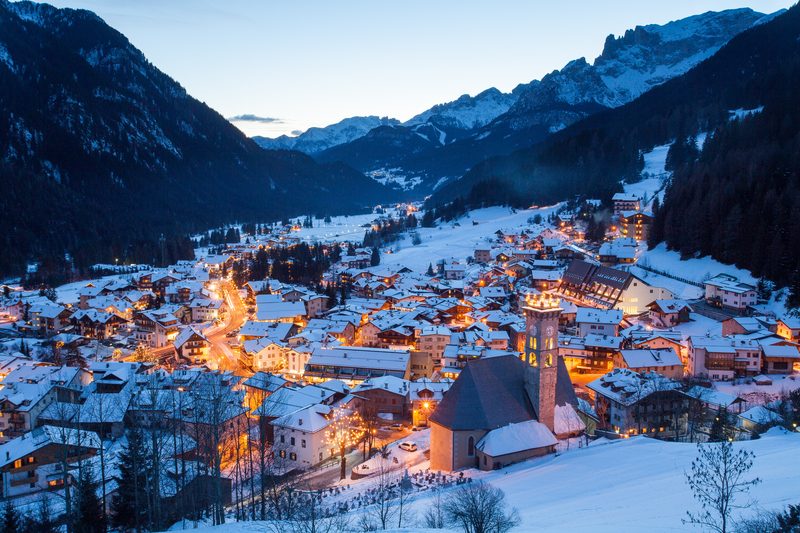
Campitello di Fassa
A few kilometres from Canazei, sharing the same lift system via Col Rodella but with a noticeably quieter, more traditional character. Campitello was the valley's first alpine tourist village, and Ladin remains the predominant local language - a genuine contrast to Canazei's livelier resort buzz, while still offering direct access onto the Sella Ronda. Best for: - A quieter base with direct Sella Ronda access via Col Rodella - Visitors interested in Ladin language and culture - Scenic intermediate cruising beneath the Sella massif Read the full Campitello di Fassa guide →

Pozza di Fassa - relaxed cruising and a year-round spa
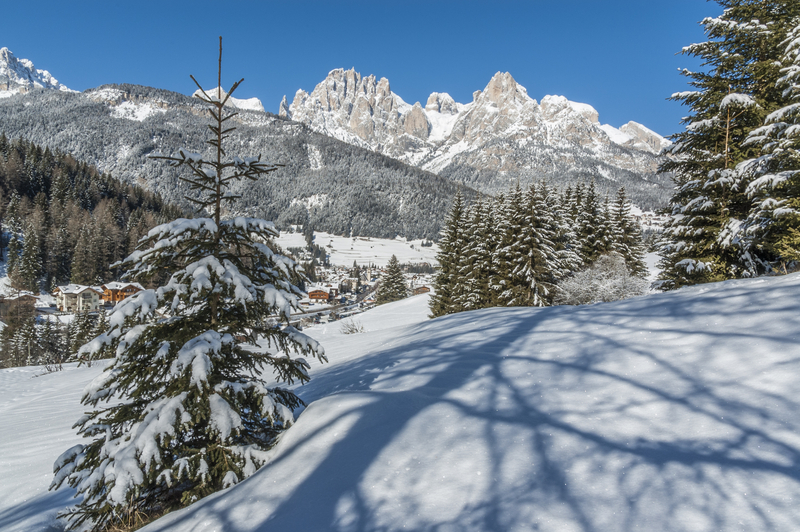
Pozza di Fassa
Roughly midway down the valley, beneath the Catinaccio-Rosengarten massif rather than the Sella. Pozza's Buffaure-Ciampac sector doesn't connect directly onto the Sella Ronda, making this one of the quieter corners of the valley - and the village is home to QC Terme Dolomiti, a large thermal spa that runs year-round rather than just in summer. Best for: - A quieter base away from the Sella Ronda crowds - Families and relaxed intermediates - Combining skiing with a visit to QC Terme Dolomiti Read the full Pozza di Fassa guide →

Vigo di Fassa - the valley's cultural heart

Vigo di Fassa
Long the seat of the valley's Ladin institutions, Vigo is home to the Museo Ladin de Fascia, a striking museum designed by architect Ettore Sottsass with Ladin legends illustrated by comic artist Milo Manara. Its own Catinaccio-Ciampedie sector has a lower-key, village feel, with the long Thöni run - named after the celebrated Italian ski racer - among its highlights. Best for: - Visitors interested in Ladin culture and history - A long, scenic intermediate run through the trees back to the village - A quiet, village-focused base Read the full Vigo di Fassa guide →
Moena
The valley's largest village, at its lower, more open end. Moena's Alpe Lusia sector is the only one in the Val di Fassa with a genuine onward lift link beyond the valley's own skipass, continuing over Passo San Pellegrino into Falcade in neighbouring Veneto. Moena is also the start of the Marcialonga, one of the world's great cross-country ski marathons, run since 1971. Best for: - A genuine onward link to Passo San Pellegrino and Falcade - Families and relaxed intermediates wanting easy cruising - Cross-country skiers and anyone interested in the Marcialonga Read the full Moena guide →

How to choose between them

All five villages share the same Val di Fassa skipass, so wherever you stay, you can explore the whole valley - the real choice is which side of it you want to wake up in. If the Sella Ronda is the priority, base yourself in Canazei or Campitello di Fassa. Canazei is the bigger, livelier of the two, with direct access to the Marmolada glacier as well; Campitello sits just a few kilometres away with a quieter, more traditional atmosphere and its own direct route onto the circuit via Col Rodella. Both put you at the heart of the valley's best-known skiing. If you'd rather avoid the Sella Ronda crowds, Pozza di Fassa and Vigo di Fassa, further down the valley beneath the Catinaccio-Rosengarten massif, are the better bases - gentler terrain, a more relaxed pace, and in Vigo's case, the valley's richest concentration of Ladin culture and history. Pozza adds the bonus of a year-round thermal spa right in the village. Moena, at the foot of the valley, is different again: it's the only village with a genuine onward lift link beyond the Val di Fassa itself, over Passo San Pellegrino into Falcade, and carries a strong cross-country skiing heritage as the start of the Marcialonga. It's a good choice if you want easy, family-friendly terrain with the option to explore further afield on skis. Whichever village you choose, a further Dolomiti Superski pass opens up the wider UNESCO World Heritage Dolomites - around 1,200 km of pistes in total - for a longer or more ambitious trip.

Other related articles

Some links may be affiliate links, meaning we may earn a small commission at no extra cost to you. Read more.